

12 October 2026
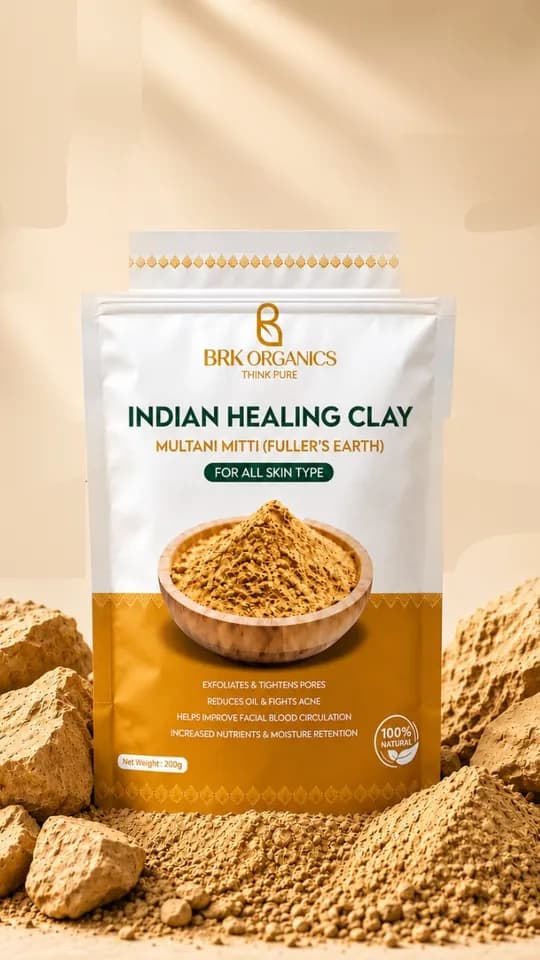
Pure multani mitti is a soft, creamy-beige to light-brown clay with little smell of its own, a label that lists only multani mitti (fuller's earth), and a smooth, even paste when you add water. If it is bright white, perfumed, gritty or sold loose with no dates, it is probably mixed or old.
The colour: creamy beige, not chalk white
Natural fuller's earth ranges from creamy beige to light brown, sometimes with a faint green or grey tint. A very bright white powder may be mixed with chalk or other fillers.
The smell: almost none
Clean clay smells faintly earthy, like the ground after rain, or of nothing at all. A perfume or rose smell means something was added; rose water is something you can add yourself.
The paste: smooth, never gritty
Mix half a teaspoon with water on your palm. Pure multani mitti turns smooth and buttery. Sand or grit you can feel means it was not sieved well.
The label: one ingredient
The ingredient list should say multani mitti or fuller's earth, and nothing else. Ready-made face pack blends with turmeric, sandalwood or fragrance are different products.
The pack: sealed and dated
Clay keeps a long time, but it soaks up moisture and smells from the air. Look for a sealed pouch, a manufacture date and the packer's name and address.
Ours
Our Indian Healing Clay, Multani Mitti is pure natural clay with nothing added, packed in Bahraich.
Questions
Is fuller's earth the same as multani mitti?
Yes. Multani mitti is the Hindi name for fuller's earth, a natural clay named after Multan, where it was traded for centuries.
Why is some multani mitti bright white?
Clay colour varies with where it is dug, but a very bright, chalky white is worth a closer look at the label. Pure fuller's earth is usually creamy beige.
Can multani mitti go bad?
The clay itself doesn't spoil, but it picks up damp and smells. Keep the pouch closed, use a dry spoon, and use it within the date on the pack.